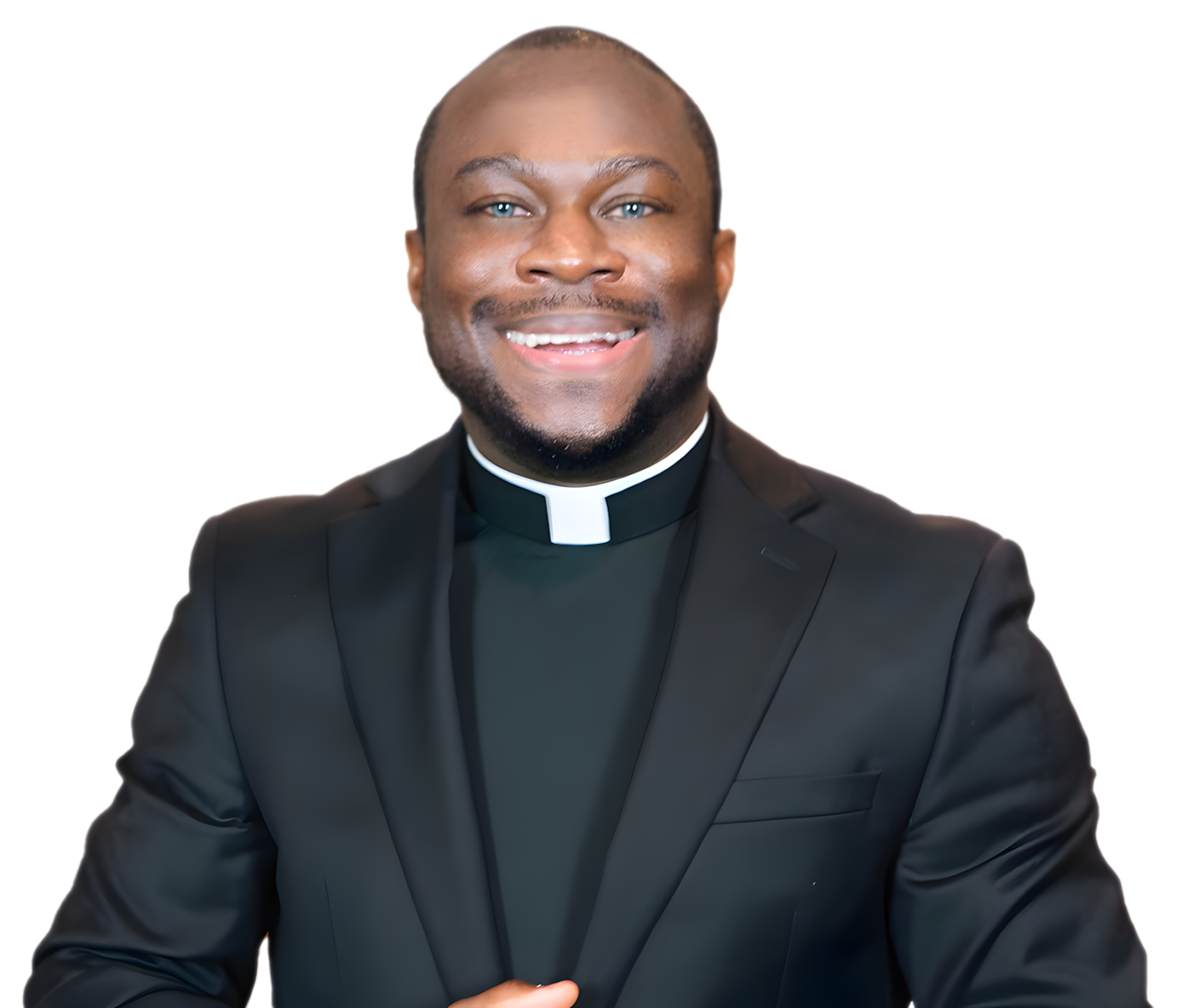
Homily for the Christ the King Sunday, Year C
“A Kingdom Not of Power, but of Surrender”
Dear brothers and sisters in Christ,
As we come today to the final Sunday of Ordinary Time—the Solemnity of Christ the King—we are invited to look at Jesus not simply as a figure of heavenly majesty, but as the King who reigns from a cross. In year C, our Gospel (Luke 23:35–43) places before our eyes a King whose throne is not gold but wood, whose crown is woven with thorns, and whose royal decree is mercy.
There was once a farmer who inherited a large field that had been neglected for years. The soil was compacted, overgrown, almost barren. His neighbors told him, “Plow only the good parts—leave the broken ground alone.” But the farmer refused. Instead, he chose the hardest part of the field, the area full of stones, thistles, and tangled roots. He walked into that broken ground every day with his plow, sweating, straining, breaking through layers of resistance. His neighbors thought him foolish.
But the farmer knew something they did not:
the richest soil is often the soil that has never been touched. And by the end of the season, it was that very barren corner of the field that yielded the most abundant harvest.
Brothers and sisters, that is what today’s solemnity teaches:
Christ is the King who chooses the broken field. The King who walks into the toughest places of our lives. The King who reigns not by avoiding suffering, but by entering it.
Christ’s Kingship Revealed in Our Brokenness
In the Gospel, Jesus is placed between two criminals. One mocks Him—because he wants a king who uses power to escape suffering.
But the other criminal—tradition calls him the “Good Thief”—recognizes a different kind of kingship. He sees a God who does not run from wounds but heals through them.
His prayer is simple and beautiful:
“Jesus, remember me when you come into your kingdom.”
And Jesus replies with the royal promise:
“Today you will be with me in Paradise.”
This is our King:
A King who remembers the forgotten, restores the broken, and opens paradise from a cross.
Like the farmer who chooses the neglected soil, Christ chooses the neglected places in us. And where we see failure, God sees fertile ground.
Three Takeaways
1. Let Christ plow the hard soil of your heart.
We all have places we avoid: an old wound, an unresolved resentment, a sin we repeat, a fear we hide. Christ the King does not rule from afar—He enters the tough soil. Invite Him in. Transformation begins exactly where we are most resistant.
2. Choose mercy over judgment—like the Good Thief.
One criminal mocked Jesus; the other opened his heart. Two men saw the same King, but only one recognized Him. Every day, you and I choose which thief we will be. Mercy opens paradise; resentment locks us out.
3. Build Christ’s Kingdom with small acts of surrender.
Jesus’ kingship is not about domination but about self-gift. His kingdom grows every time we surrender—not to defeat—but to love:
• forgiving someone who hurt us
• asking for help when we feel weak
• choosing kindness over superiority
• trusting God when life feels uncertain
Christ rules not where we are strongest, but where we surrender most.
As we close the liturgical year, let us kneel once more before this unusual King—a King who reigns by compassion, whose power is shown in vulnerability, whose crown draws us into mercy. May Christ the King walk into the hard soil of your life, break open what is barren, and bring forth a harvest of grace greater than you can imagine.
Amen.
Have a splendid day!