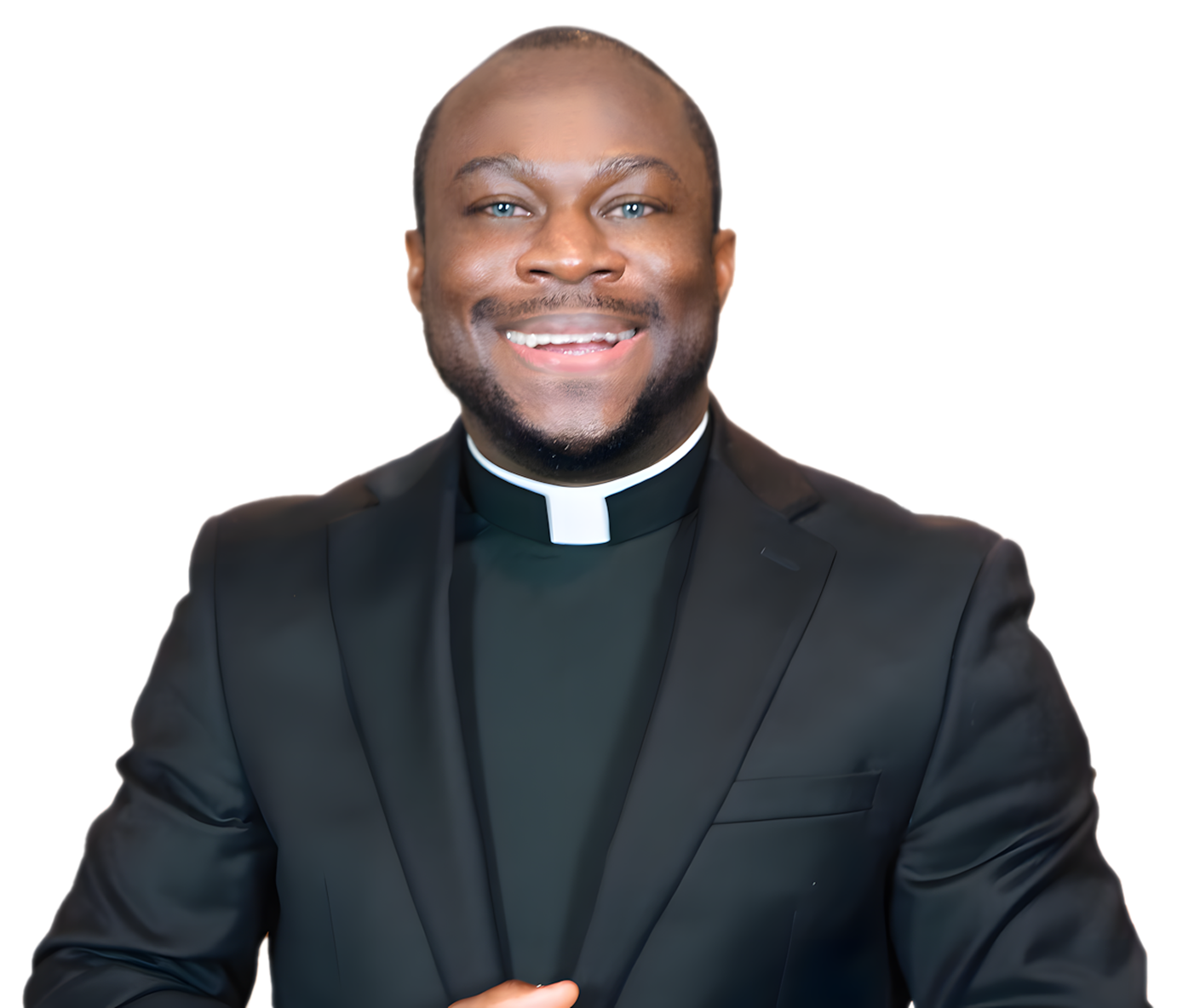
Homily for the Solemnity of All Saints, Sunday, November 1, 2026 · Year A
Revelation 7:2–4, 9–14; Psalm 24; 1 John 3:1–3; Matthew 5:1–12a.
“THE SAINTS WERE NOT PERFECT PEOPLE; THEY WERE PEOPLE WHO NEVER STOPPED RESPONDING TO GOD’S CALL.”
Friends, one of the greatest mistakes we make about holiness is that we think saints are people who were born different from us. We imagine that they never struggled, never experienced temptation, never made mistakes, never cried, and never faced difficult moments. We sometimes place the saints so high on a pedestal that we forget they were once ordinary human beings who struggled with extraordinary circumstances. But today, the Church reminds us of something powerful: Holiness is not reserved for a privileged few; it is the calling of every baptized Christian.
Also, the saints were not people who lived without struggles. They were people who allowed God's grace to be greater than their struggles. Some were rich; others were poor. Some were educated; others were not. Some lived in monasteries; others raised families, worked in ordinary professions, cared for the sick, served the poor, and defended the vulnerable. What united them was not their social status, background, or personal achievements. What united them was their willingness to belong completely to God. Today, therefore, is not simply a day to admire the saints. It is a day to ask ourselves: What is preventing me from becoming the person God created me to be?
Heaven is filled with people who refused to give up. In the first reading, John describes a great multitude standing before the throne of God, from every nation, race, people, and language. They are dressed in white robes and holding palm branches. They have come through a great period of suffering and have washed their robes in the blood of the Lamb. This image is deeply encouraging.
Heaven is not presented as the private possession of one tribe, one nation, one race, or one social class. It is a gathering of God's redeemed people from everywhere. And notice something important: they have come through suffering. The saints were not strangers to pain. Some experienced rejection, persecution, betrayal, poverty, sickness, and martyrdom. Others endured the quiet sacrifices of ordinary life. Some fought public battles; others fought private battles nobody knew about. But they remained faithful. This should encourage anyone who is passing through difficult circumstances today.
Perhaps you are struggling financially. Perhaps your family is going through a difficult season. Perhaps you have experienced disappointment, rejection, or betrayal. Perhaps you are tired of praying without seeing the answers you desire. Today's celebration reminds us that suffering does not have the final word.
Your present situation is not the final chapter of your story. Do not allow temporary suffering to make you abandon your eternal calling. The saints teach us that the road to heaven is not necessarily free of tears, but it is never without God's presence.
You are already God's child; live like one. In the second reading, St John declares: “See what great love the Father has lavished on us, that we should be called children of God! And that is what we are!” This is one of the most beautiful declarations in Scripture.
Before we become saints, we must understand whose we are. We are God's children. Holiness begins with identity. We do not pursue holiness to persuade God to love us. We pursue holiness because God already loves us. Unfortunately, many people live below the dignity of their divine identity. They allow their past mistakes to define them. They allow other people's opinions to destroy their confidence. They allow their failures to convince them that they are useless.
Surely, some people have become prisoners of their past. They cannot forgive themselves. They cannot imagine a new beginning. They believe that because they have fallen, they can never rise again. But the Gospel tells us that God's grace is greater than our failures. The saints were not people who never fell; they were people who kept returning to God. St. Augustine reminds us that a restless heart finds its peace in God. St. Peter reminds us that even after denying Jesus, one can be restored to love and service. Therefore, never confuse your mistakes with your identity.
You may have failed, but you are not a failure. You may have fallen, but you are not destined to remain on the ground. You are a child of God. Live with that dignity.
The Beatitudes are God's unexpected definition of greatness. In today's Gospel, Jesus gives us the Beatitudes. They are not merely beautiful religious statements. They are the constitution of the Kingdom of God and the spiritual portrait of a saint. Consider how different Jesus' definition of happiness is from the world's definition.
The world tells us:
- Blessed are the rich, because they can afford everything.
- Blessed are the powerful, because nobody can challenge them.
- Blessed are the influential, because everybody knows them.
- Blessed are those who win, because success is everything.
But Jesus says:
- Blessed are the poor in spirit.
- Blessed are those who mourn.
- Blessed are the meek.
- Blessed are those who hunger and thirst for righteousness.
- Blessed are the merciful.
- Blessed are the pure in heart.
- Blessed are the peacemakers.
- Blessed are those persecuted for righteousness.
Jesus is not glorifying poverty, suffering, or persecution for their own sake. He reveals the values of God's Kingdom and promises that those who remain faithful to them will receive God's blessing.
Let us reflect on three of these Beatitudes.
A. Blessed are the poor in spirit
To be poor in spirit is to recognise that we need God. It is the humility to admit that our intelligence, money, connections, titles, and achievements cannot replace God's grace. Some people have so much of everything that they forget they need God. But the saints understood that everything is grace.
B. Blessed are the merciful
Mercy is one of the clearest signs of holiness. A merciful person does not enjoy another person's downfall. A merciful person does not use another's weakness as an opportunity for humiliation. The merciful forgive, encourage, restore, and allow others to begin again. Sometimes the most saintly thing you can do is to refuse to repay evil with evil.
C. Blessed are the peacemakers
Notice that Jesus does not say blessed are those who merely enjoy peace. He says blessed are the peacemakers. There is a difference. Some people want peace but are unwilling to apologise. Some demand reconciliation but refuse to forgive. Some pray for unity while spreading rumours and creating divisions. A peacemaker takes responsibility for building bridges.
A peacemaker is not necessarily someone who avoids difficult conversations. Sometimes peace requires courage, truth, justice, and reconciliation. Our families, communities, churches, and nation need peacemakers. Perhaps today Jesus is calling you to become one.
Furthermore, Saints are made in ordinary places. One of the most important lessons of today's celebration is that holiness is not confined to extraordinary religious experiences. You do not have to perform miracles to become a saint. You do not have to preach to thousands of people. You do not have to occupy an important position in the Church.
Holiness can begin in your kitchen, your office, your classroom, your marketplace, your hospital, your farm, and your family. A mother who patiently raises her children in faith is responding to the call to holiness. A father who works honestly to provide for his family is responding to the call to holiness. A young person who refuses corruption and chooses integrity is responding to the call to holiness. A priest who serves God's people with humility, compassion, and fidelity is responding to the call to holiness. A person who cares for an elderly parent, visits the sick, feeds the hungry, and forgives an offender is responding to the call to holiness.
The saints remind us that ordinary lives, lived with extraordinary love, become extraordinary offerings to God. We often postpone holiness until tomorrow. We say, “When I become financially stable, I will be generous.” “When I become successful, I will serve God.” “When people begin to treat me well, I will forgive.” “When life becomes easier, I will become more prayerful.”
But holiness does not begin tomorrow. It begins with the decisions we make today. Do not wait for a perfect environment to become a holy person. Start where you are. Use what you have. Do what you can. Let God work through you.
So, the communion of saints reminds us that we are never alone. Today's first reading gives us a beautiful image of a multitude gathered before God's throne. The Church teaches that the saints are not simply historical figures whom we remember. They belong to the communion of saints. We are united with them in Christ. Their lives encourage us. Their witness strengthens us. Their prayers remind us that the Church is bigger than what we see gathered in our local parish. This is particularly meaningful when we remember those who have gone before us.
Some of us have lost parents, siblings, friends, priests, religious, and loved ones. Their absence leaves painful spaces in our lives. But the communion of saints reminds us that death does not destroy the bonds of love in Christ. Today, we celebrate the victory of God's grace in the lives of those who have reached their heavenly homeland. Tomorrow, on All Souls' Day, we will pray especially for the faithful departed. Today is therefore a celebration of hope: the hope that the journey of faith, when lived in God's grace, leads us home.
Therefore, do not merely admire the saints; become one. The celebration of All Saints is not an invitation to admire holiness from a distance. It is an invitation to participate in it. We honour the saints, but we must also imitate them. We celebrate their victories, but we must also learn from their struggles. We remember their faith, but we must also practise ours.
Perhaps the world will never know your name. Perhaps you will never receive a public award for your kindness. Perhaps nobody will write a book about your sacrifices. That does not matter. God sees the unnoticed sacrifices. God remembers the hidden tears. God values the little acts of love that the world considers insignificant. One day, what matters most will not be how famous we became, how wealthy we were, or how many people applauded us. What will matter is whether we became faithful to the grace God gave us. So, let us leave this celebration with a renewed determination:
- Be humble when you have power.
- Be generous when you have resources.
- Be merciful when you have the opportunity to condemn.
- Be courageous when truth demands a voice.
- Be faithful when life becomes difficult.
- Be loving even when love demands sacrifice.
Do not merely wear the name Christian; live the life of Christ. Do not merely celebrate the saints; follow their footsteps. Do not merely admire heaven; prepare to belong there.
Remember this: the world may measure greatness by how many people serve you, but heaven measures greatness by how faithfully you serve others. May God grant us the grace to become saints, not merely in our words and aspirations, but in our daily choices, relationships, sacrifices, and love. And when our earthly pilgrimage is over, may we join that countless multitude standing before the throne of God, clothed in the victory of Christ. Amen.
Have a splendid Sunday!