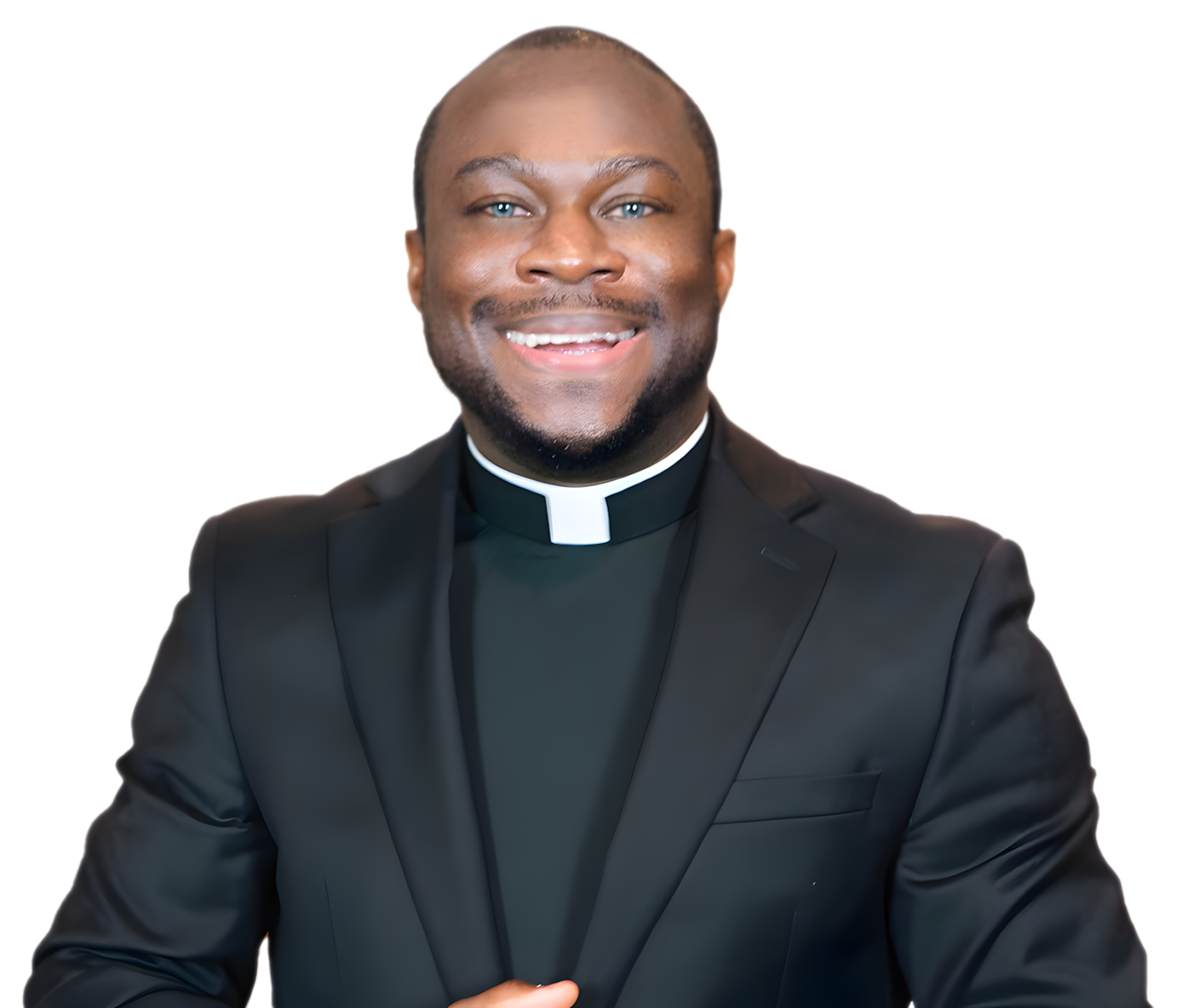
Easter Sunday Homily
Acts 10:34a, 37–43; Psalm 118; Colossians 3:1–4; 1 Corinthians 5:6b–8; John 20:1–9
“He is not here… He has been raised.”
This is not merely a statement. It is a seismic proclamation that splits history in two. It is the cry that echoes from an empty tomb into every human heart that has ever known sorrow, fear, guilt, or death.
Easter is not just the celebration of something that happened to Jesus.
Easter is the revelation of what God has done—for us, to us, and in us.
In the Gospel, we see Mary Magdalene arriving at the tomb while it is still dark. And isn’t that where so many of us begin? In the darkness—of grief, of confusion, of loss, of unanswered questions.
She comes expecting death.
She comes prepared to mourn.
She comes to a sealed story.
But instead—she finds an open tomb.
And everything changes.
Peter and John run.
One outruns the other, but neither fully understands. They see the burial cloths. They see the absence. And the Gospel tells us something remarkable:
“He saw and believed. For they did not yet understand the Scripture…”
He believed before he understood.
This is the heart of Easter faith.
We do not wait until everything makes sense to believe.
We believe because something has happened that breaks into our confusion—something so real, so powerful, that it demands trust even before comprehension.
In the First Reading from Acts, Peter proclaims boldly:
“They put him to death by hanging him on a tree. This man God raised on the third day…”
This is the scandal and the glory of Christianity:
The One rejected, humiliated, crucified—is the One God vindicates.
The Cross was not the end.
It was the passage.
And now, Christ stands as Lord of the living and the dead—not as a memory, not as an idea, but as a living, reigning Person.
And what does this mean for us?
St. Paul tells us in Colossians:
“If you were raised with Christ, seek what is above…”
Notice—he does not say “you will be raised.”
He says—you were raised.
Easter is not only about Christ rising from the dead.
It is about you rising with Him.
Through baptism, through grace, through faith—your life is now hidden with Christ in God.
This means:
Your past does not define you.
Your sin does not imprison you.
Your suffering does not have the final word.
Even death itself is no longer defeat.
Because Christ is risen—your life has a future that cannot be destroyed.
But St. Paul also warns us in Corinthians:
“Clear out the old leaven… Let us celebrate the feast… with sincerity and truth.”
Easter is not just comfort—it is conversion.
You cannot celebrate the Resurrection while clinging to what belongs to the tomb.
The stone has been rolled away—not just from Christ’s grave, but from your heart.
So the question is:
What still remains buried in you?
What habits, sins, fears, or resentments are you still holding onto—when Christ is calling you into new life?
Psalm 118 declares: “This is the day the Lord has made; let us rejoice and be glad.”
Not yesterday.
Not tomorrow.
Today.
Easter is not a past event—it is a present reality.
Christ is risen now.
Christ is alive now.
Christ is calling you now.
And so we return to the tomb.
It is empty. But it is not silent.
It speaks:
To the grieving: your sorrow will not last forever.
To the sinner: your past can be forgiven.
To the fearful: death has lost its sting.
To the weary: new life is possible.
Brothers and sisters,
The Resurrection is not an idea to admire.
It is a life to enter.
Run to the tomb.
See what the disciples saw.
Believe—even before you fully understand.
And then go—like Peter, like Mary Magdalene—
and become witnesses.
Witnesses that Christ is alive.
Witnesses that hope is real.
Witnesses that love has conquered death.
Christ is risen.
He is risen indeed.
And because He lives—
you shall live!